New Hampshire’s Top Irrigation Contractor
Giant Landscaping: Irrigation installation in Manchester, NH. Custom design, professional setup, repairs, winterization. Get a water-smart system!
Finding the Best Irrigation System Installer
There are many landscape contractors who provide irrigation system installations as a sideline service because they can be done quickly. As a result, there is a lot of competition – which makes finding the best irrigation contractor to install your system a daunting task. How do you know if you are getting the best irrigation system for a fair price?
When Irrigation Systems Are Priced Per-Head
The biggest mistake homeowners make when deciding which irrigation contractor to hire is by comparing per-head pricing quotes. Irrigation systems are not a one-size-fits-all commodity. There are many factors that can affect the cost of an irrigation system. These are some of those factors and why they can affect the price:
Water Pressure
Adequate water pressure can typically run 5 to 6 heads per zone with good coverage. If the water pressure is poor, that requires more zones, which means more valves and wire.
Sunlight
While it’s true that a lawn irrigation zone can typically accommodate up to 6 heads, it may be necessary to create more zones in order to customize runtimes. This is important if you want to avoid overwatering shady areas or under-watering sunny parts of the yard.
Head-to-Head Coverage
Lawn rotors can normally be spaced as much as 30 feet apart. Some contractors pricing by the head may try to cheat that. For the best coverage, smaller areas may require more heads to avoid over-spraying walkways and other landscape structures.
Hardware and Tech
Irrigation system components may be upgraded based on water flow and recovery limitations or simply customer preferences. Costs of this hardware and tech – as well as the time to install it – can affect the overall price of an irrigation system.
How We Approach an Irrigation System Install
Every irrigation system that Giant Landscaping installs is customized to the needs of the client and the property. When you call us for an irrigation quote, this is the process that we follow every time:
Our Process
- Site Assessment – we measure the water pressure, flow rate and recovery rate of the well on-site
- Estimate – we design your irrigation system based on that data and provide a proposal
- Plumbing – after the proposal is accepted, your backflow preventer is installed by a licensed plumber. We can provide that service, recommend a contractor, or allow you to hire your own.
- Utilities – we call Dig Safe to locate and mark locations of underground utilities
- Install System – after Dig Safe has marked the utilities, we will install your irrigation system. Most residential systems can be installed in 1 to 2 days; commercial irrigation systems can take from 2 days to 2 weeks.
- System Test and Walk-Through – once your system is installed we set up your controller and run through each zone and make final adjustments. Our lead technician will show you how to use your system. We recommend that you video this process for future reference.
Irrigation Maintenance Services
Perhaps the greatest advantage of hiring Giant Landscaping to install your irrigation system is that we service every system that we install. It’s not a side-gig for us! Our irrigation techs have years of experience and are trained in the latest techniques and technology.
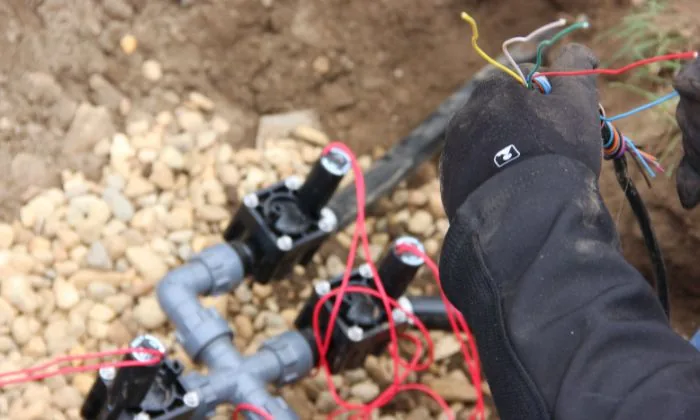
Over 400 customers rely on our irrigation maintenance services to keep their systems running in top shape!
- Spring startups – charge the system and run each zone. Adjust or repair heads as needed.
- System calibration – adjusting controller settings for optimal water use
- System expansions – adding zones to existing systems
- System upgrades –upgrading older system components with new technology
- Emergency repairs – replace broken water lines, wire or sprinkler heads
- Winterization Services – blow out entire system in the fall to prevent freeze damage
Isn’t it about time to have a trouble-free lawn that stays green all summer? Give our office a call to schedule a free irrigation system consultation from Giant Landscaping!
I had an irrigation system installed. Eric, Angel and Joe did a great job. They were on time, worked hard all day, and did a great job with the install and clean up after. I highly recommend Giant Landscaping!
Irrigation System Installation Service Areas in New Hampshire
 Manchester, NHResidential & commercial landscape maintenanceView services
  Bedford, NHResidential & commercial landscape maintenanceView services
  Goffstown, NHResidential & commercial landscape maintenanceView services
  Hooksett, NHResidential & commercial landscape maintenanceView services
  Auburn, NHResidential & commercial landscape maintenanceView services
  Derry, NHResidential & commercial landscape maintenanceView services
  Londonderry, NHResidential & commercial landscape maintenanceView services
  Litchfield, NHResidential & commercial landscape maintenanceView services
  Merrimack, NHResidential & commercial landscape maintenanceView services
 Ready to talk about your property?
Tell us what you need and we'll get back to you with an estimate. Residential and commercial landscaping across Greater Manchester.