
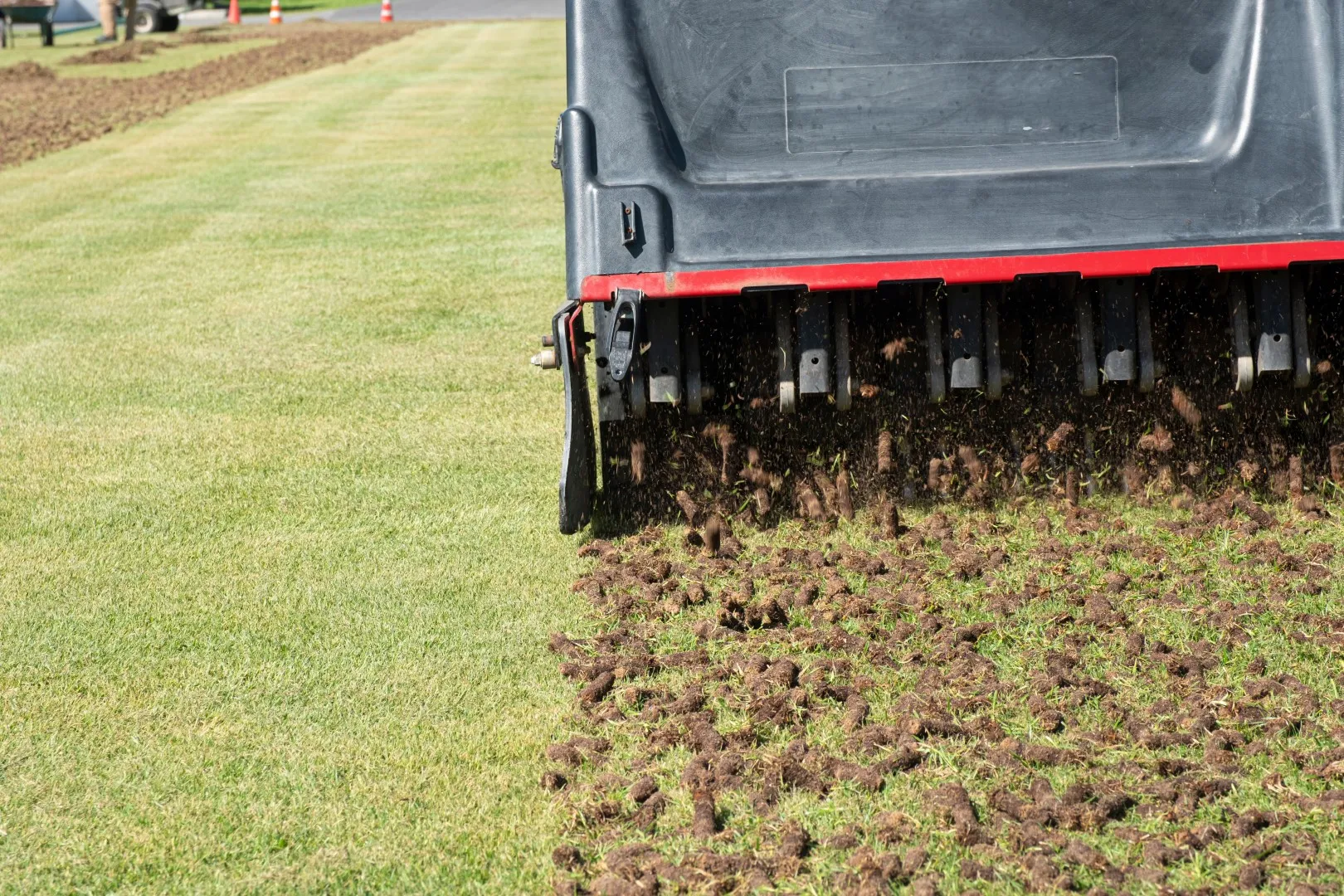
Aeration and overseeding are two of the best things you can do for your grass, but if you do them at the wrong time, you’re just wasting effort. Here in Manchester, NH, our swings in temperature and moisture mean timing matters even more. In this guide, we’ll walk you through when to aerate and overseed, how to prep your lawn beforehand, and what to do afterward to help everything take root. We’ll also cover the seasonal timeline we follow, whether spring aeration can work, and how we approach overseeding here in New Hampshire. Follow along and you’ll set your lawn up to look great all season long.
Timing:
Hands down, fall is the best time to aerate and overseed your lawn here in Manchester. As temperatures cool off and moisture picks back up, you get the sweet spot conditions grass seed needs to germinate. Aeration loosens up compacted soil so water and nutrients can actually reach the roots, and overseeding lets us introduce fresh seed that’s suited to our local climate. Get the timing right and you’re setting your lawn up for real success. Get it wrong, and you’re looking at poor seed growth and a lawn full of weeds instead.
Weather Conditions:
Here’s the thing about grass seed: it wants warm soil and cool air to really germinate well. That combo is exactly why we push fall over spring for seeding around here. By late summer and early fall, the soil’s still holding onto that summer warmth, while the air temps have started to cool off — giving seed the best of both worlds. You also want the soil moist, not soaked — too wet and you risk the seed rotting before it ever gets going. In spring, it’s the opposite problem: the soil’s still cold from winter even as the air warms up fast, so seed doesn’t get nearly as good a start. And no matter the season, we don’t recommend aerating or overseeding when it’s blazing hot or freezing cold outside — your lawn just won’t bounce back the way it should.
Preparation Steps:
Before we ever bring out the aerator, there’s some prep work that makes a real difference. Here’s what we recommend:
Remove Debris: Clear out leaves, sticks, and anything else in the way so the seed can actually reach the soil.
Mow the Lawn: Cut the grass a bit shorter than usual so the seed makes good contact with the ground.
Test Soil Health: Run a soil test to check nutrients and pH, so you know if anything needs adjusting first.
Aerate the Soil: Use a core aerator to punch holes in the soil, opening things up so seed can settle in easily.
Knock out these steps first, and you’re giving your lawn the best shot at a strong comeback.
Post-Application Care:
Once we’ve aerated and overseeded your lawn, the work isn’t quite done — how you care for it afterward really matters. Keep an eye on these things:
Watering: Keep the soil consistently moist, but don’t drown it. Deep, steady watering helps roots grow down deep where they belong.
Fertilization: A starter fertilizer gives new grass the nutrients it needs to get established.
Mowing: Hold off on mowing until the new grass hits about 3 inches tall, so you don’t damage those young shoots.
Stick with this routine and you’ll see your new grass take hold and thrive for the long haul.
What Seasonal Timeline Should You Follow for Lawn Aeration in Manchester, NH?
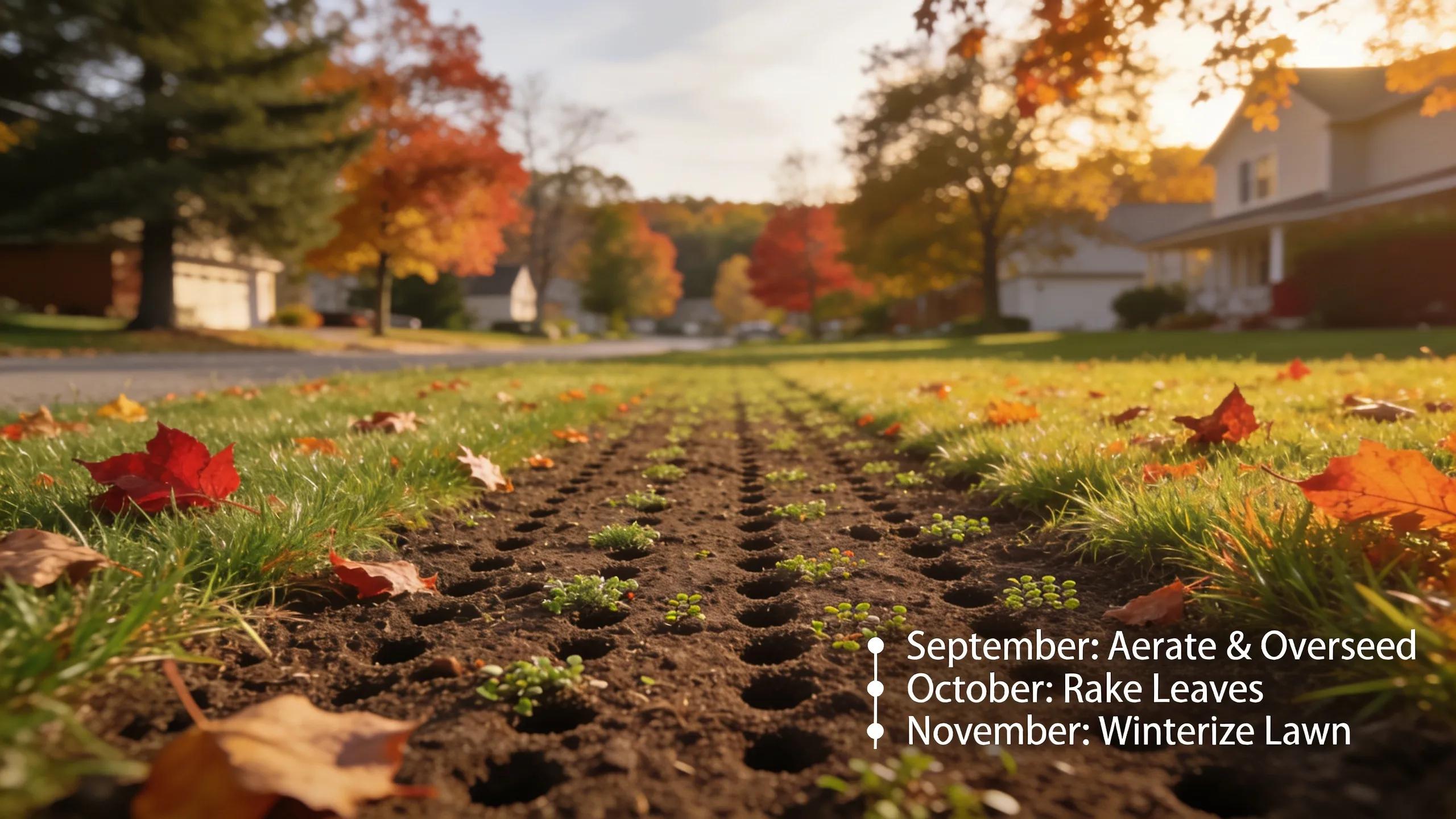
We like to think of aeration on a seasonal calendar. Around here, the sweet spot falls between late August and mid-October. That window gives grass seed enough time to germinate and get established before frost hits. We usually start prepping — soil tests, clearing debris — a few weeks before we actually aerate, right as temperatures begin cooling down.
It also pays to plan ahead for the rest of your fall lawn care, since overseeding and fertilizing typically follow aeration. We’re happy to help you map all of this out — reach out to Giant Landscaping and we’ll put together a plan built around your lawn’s specific needs.
Can Spring Be a Good Time for Aeration?
Fall is our go-to, but spring can work too if you’re careful. A few things to watch out for:
Weed Competition: Spring is also prime time for weeds, so your new grass will be competing for space and resources right out of the gate.
Temperature and Soil Conditions: Spring weather can be unpredictable, and swings in temperature affect soil moisture and how well grass establishes.
Grass Type Considerations: Some cool-season grasses struggle once things warm up fast in spring, so picking the right grass type really matters.
If you do decide to go the spring route, we recommend keeping a close eye on soil conditions and timing everything carefully to give your lawn the best chance.
How and When Should You Overseed Your Lawn in New Hampshire?
Getting overseeding right comes down to timing and technique. Like aeration, the best window for overseeding in New Hampshire is those cooler fall months. Here’s what we focus on:
Soil Preparation: Make sure the lawn is properly aerated and that thin or bare spots get enough seed coverage.
Choosing the Right Seed: Pick a seed mix that fits your lawn and holds up well in our New Hampshire climate.
How Much Seed Should You Use When Overseeding?
Getting the seeding rate right matters more than people think. As a general rule of thumb, we apply about 3 pounds of seed per 1,000 square feet.
That said, we’ll adjust based on how your lawn is doing currently and how thick you want the new grass to grow in. A quality seed blend suited to our local climate goes a long way toward getting good results.
What Soil Preparation Steps Help Lawn Aeration and Overseeding Succeed?
Good soil prep sets the stage for aeration and overseeding to actually work. Here’s what we recommend:
Conduct Soil Testing: Check nutrient levels and overall soil health so you know what adjustments to make.
Incorporate Organic Matter: Working in compost or peat moss boosts soil fertility and helps grass establish faster.
Mechanical Preparation: Pairing core aeration with a slit seeder gets you the best seed-to-soil contact possible.
How Do You Prepare Your Lawn Soil for Fall Maintenance?
When we’re prepping soil for fall, here’s our approach:
Conducting Soil Tests: A solid soil test tells us exactly what the lawn needs before we add anything.
Clearing Debris: Getting rid of organic debris on the surface lets air and seed reach the soil the way they should.
Aerating the Soil Effectively: Core aeration at the right time gets seed down where it needs to be.
Nail these steps and you’re building a strong foundation for whatever comes next.
How Does Seasonal Lawn Maintenance Support Aeration and Overseeding?
Aeration and overseeding work best as part of an ongoing routine, not a one-and-done fix. That means staying on top of:
Regular Mowing: Cuts down on weed competition and keeps grass growing strong.
Fertilization: Gives your lawn the nutrients it needs, especially right after aeration and overseeding.
Moisture Management: Consistent watering is important. The irrigation systems we install have germination settings that allow you to water specific zones up to 6 times per day – keeping the seed moist but not soggy.
Keep up with this kind of care and your lawn won’t just recover from aeration — it’ll actually thrive long after.
How Can Online Scheduling and Transparent Pricing Help You Plan Seasonal Services?
We know planning lawn care shouldn’t be a hassle, which is why we make scheduling and pricing as simple as possible. With online tools and upfront pricing, you can:
Access Detailed Estimates: See clear pricing for services like aeration and overseeding, no surprises.
Easily Schedule Services: Book your seasonal maintenance in advance instead of scrambling last minute.
Receive Expert Consultation: Talk with our team about what your specific lawn actually needs.
These tools make it a lot easier to stay on top of your lawn care and make sure you don’t miss those key windows for service.
What Additional Landscaping Services Can Enhance Your Lawn’s Health and Appearance?
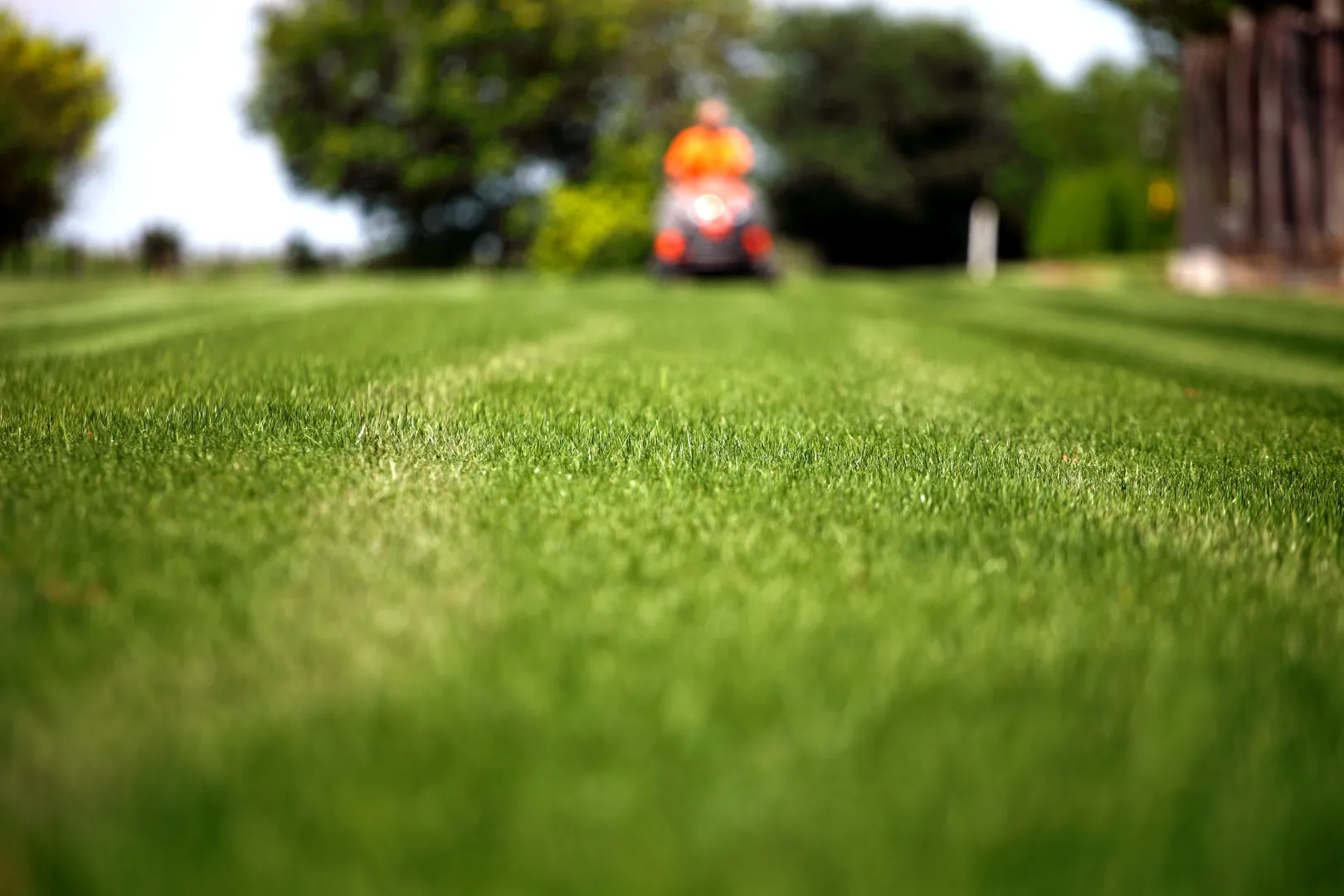
Aeration and overseeding are great, but they’re just part of the picture. A few other services we offer that can round things out:
Core Aeration: Our go-to for improving soil health and helping water soak in where it’s needed.
Softscape Installations: Adding trees and shrubs brings more variety and visual interest to your landscape.
Irrigation Systems: A good irrigation setup keeps your lawn watered consistently, even during dry stretches.
Add these services into the mix and your lawn won’t just recover from aeration and overseeding — it’ll keep looking great well beyond that.
When Should You Consider Installing Irrigation Systems in Manchester, NH?
If you’re thinking about irrigation, early spring is the best time to get it installed, right before those dry summer months roll in. An automated system takes the guesswork out of watering and keeps your grass healthy no matter what the weather’s doing. When we install a system, we look at your soil type, how much coverage you need, and what kind of upkeep it’ll require down the road. Plan ahead and get your irrigation in place, and you’ll waste less water while keeping your lawn green all season.