
The Challenges Of Replacing a Mature Tree on a Historic Property
Large, mature trees give a property a sense of scale and permanence that can take decades to develop. When one of those trees is lost to age, disease, or storm damage, replacing it with a typical nursery-sized tree can leave a noticeable void in the landscape.
That was the challenge facing a homeowner in Goffstown, New Hampshire, after a powerful windstorm brought down a massive Eastern White Pine on her historic 1800s property.
The pine had stood approximately 100 feet tall, making it a defining feature of the landscape. While no newly planted tree could immediately replace more than a century of growth, the homeowner wanted something more substantial than the typical 10- to 12-foot tree.
She contacted Giant Landscaping to explore another option: planting a large landscape tree that could provide immediate impact while becoming a new legacy tree for the property.
Replacing a 100-Foot Eastern White Pine
Replacing a mature tree involves more than filling an empty space.
The original Eastern White Pine contributed height, shade, and visual weight to the property. Once it was gone, the scale of the entire landscape changed.
Starting over with a small tree would eventually work, but it could take decades before the new tree had a meaningful presence. Instead, we began looking for a large specimen tree that was better suited to the scale and character of the property.
Our goal wasn’t to duplicate the original tree. It was to find the right tree for the site and the homeowner’s long-term goals.
Finding the Right Mature Tree for the Property
Large landscape trees aren’t always available at a local retail nursery. To give the homeowner more choices, we arranged a visit to a large regional wholesale nursery specializing in high-quality landscape trees.
We met her there and spent several hours walking through the available inventory.
When selecting a mature tree, species is only part of the decision. We also evaluate characteristics such as:
- Overall height and canopy size
- Root ball size and condition
- Trunk caliper and structure
- Branching habit and tree form
- Health and vigor
- Mature growth characteristics
- Available planting space
- Sun and soil conditions
- How the tree complements the surrounding landscape
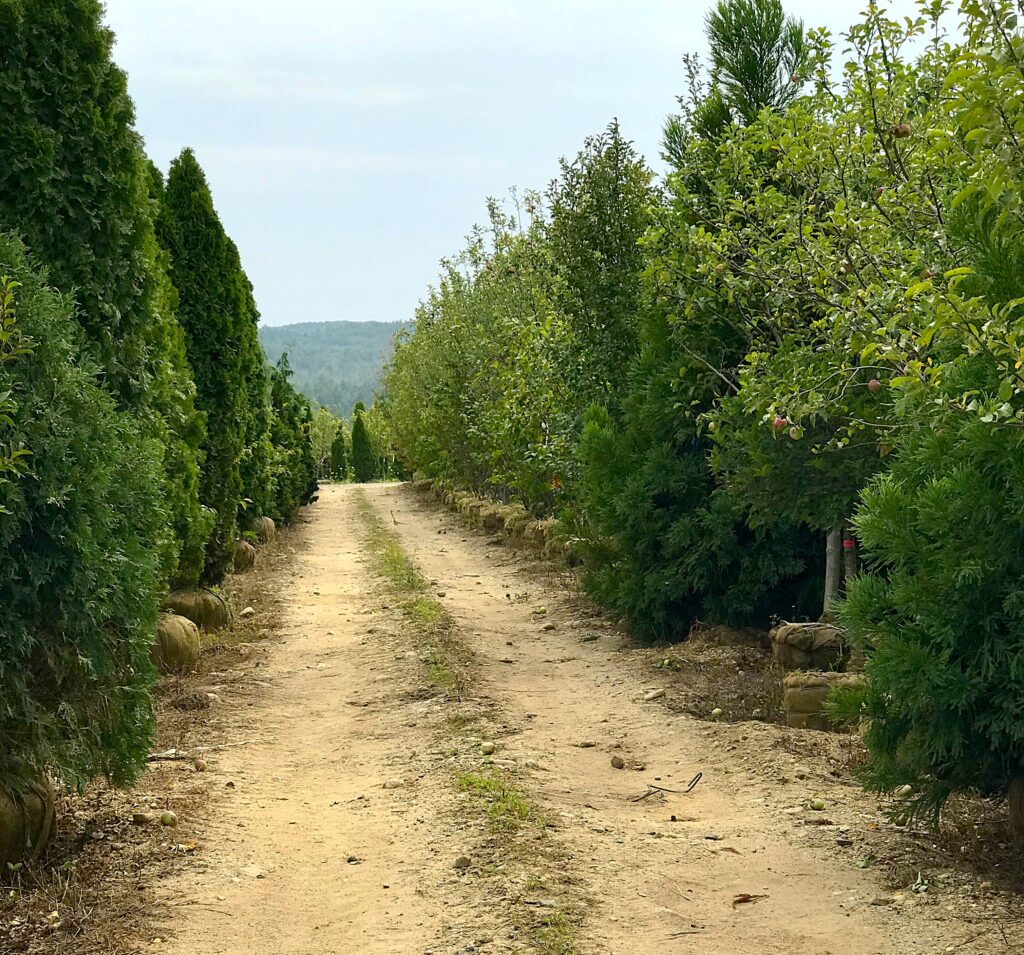
After considering several options, we recommended a 20-foot Sugar Maple rather than another Eastern White Pine.
Why We Chose a Sugar Maple
Eastern White Pines are iconic New Hampshire trees and can grow quickly, but replacing the original pine with another pine wasn’t necessarily the best solution for this particular location.
Sugar Maple tree planting offered several advantages for this property.
Its broad canopy would eventually fill the open space more effectively, while its strong structure made it a good long-term landscape tree. As a deciduous tree, it would also provide welcome shade during the summer while allowing sunlight through the canopy after the leaves dropped in fall.
And, of course, a mature Sugar Maple brings another benefit to a New Hampshire landscape: outstanding fall color.
Rather than trying to recreate exactly what had been lost, we selected a tree that could become an important new feature of the property in its own right.
Sourcing and Reserving the Mature Tree
One challenge with specimen tree planting is availability.
Unlike smaller nursery stock that may be available by the hundreds, high-quality mature trees can be limited. Individual trees also have different forms and characteristics, so choosing a specimen can be much more personal than simply ordering a particular species and size.
A few days after our initial nursery visit, we returned for another project and discovered that only two of the trees the homeowner had liked were still available.
We photographed both trees and contacted her. Once she made her final choice, we tagged the Sugar Maple and reserved it for her property.
Professional Large Tree Planting in Goffstown
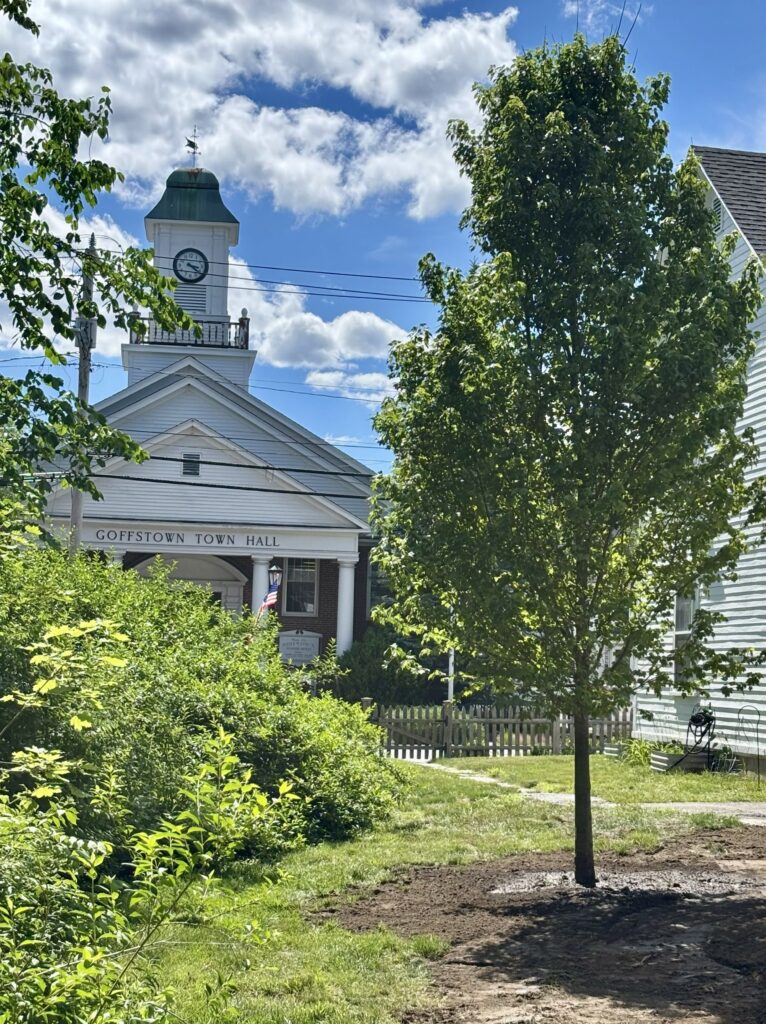
Planting a 20-foot tree is considerably different from planting standard nursery stock.
Before installation, our team needed to consider the size and weight of the tree and root ball, transportation, equipment requirements, access to the planting location, existing landscape features, and site conditions.
Proper planting is especially important with larger trees. A mature specimen represents a significant investment, and establishing it successfully requires careful handling from the nursery through final installation.
Once the tree arrived, Giant Landscaping transported and professionally planted it at the Goffstown property.
The result was well worth the additional planning.
Immediate Landscape Impact Without Starting Small
No 20-foot tree can completely replace a 100-foot pine that has been growing for generations. But starting with a larger tree dramatically reduced the difference in scale.
Instead of a small sapling surrounded by a mature landscape, the new Sugar Maple had visual presence from the day it was planted.
It immediately helped fill the space left behind by the original pine while giving the homeowner a tree that can continue developing alongside the property for decades.
The new Sugar Maple has established well and is doing very well in its new location.
“Mature trees can represent significant economic value in a landscape, well beyond the cost of purchasing a replacement tree. Professional tree appraisals may consider a tree’s species, size, condition, location, and contribution to the property, as well as the costs of sourcing, transporting, installing, and establishing a comparable replacement. For trees too large to practically replace, arborists may use appraisal methods that account for trunk size and other factors to estimate value.”
Source: Fountain, William M., and Ellen V. Crocker. “Trees: What Is Your Tree Worth?” University of Kentucky, Department of Horticulture / Forestry and Natural Resources
When Does Planting a Mature Tree Make Sense?
Large tree planting isn’t necessary for every landscape project. In many situations, younger trees are an excellent choice and can establish quickly.
However, mature and large specimen trees can be particularly valuable when immediate scale and appearance are important.
They can be a good option for historic properties, estate landscapes, legacy tree replacements, privacy screening, shade tree installations, new landscape designs, and properties where smaller trees would look out of proportion with the surrounding architecture or landscape.
The key is choosing the right species, the right individual tree, and the right planting location.
Large Tree Planting Services in Southern New Hampshire
At Giant Landscaping, we can help with more than simply planting the tree.
For projects requiring larger landscape trees, we can assist with tree selection, nursery sourcing, transportation, site preparation, professional planting, and establishment.
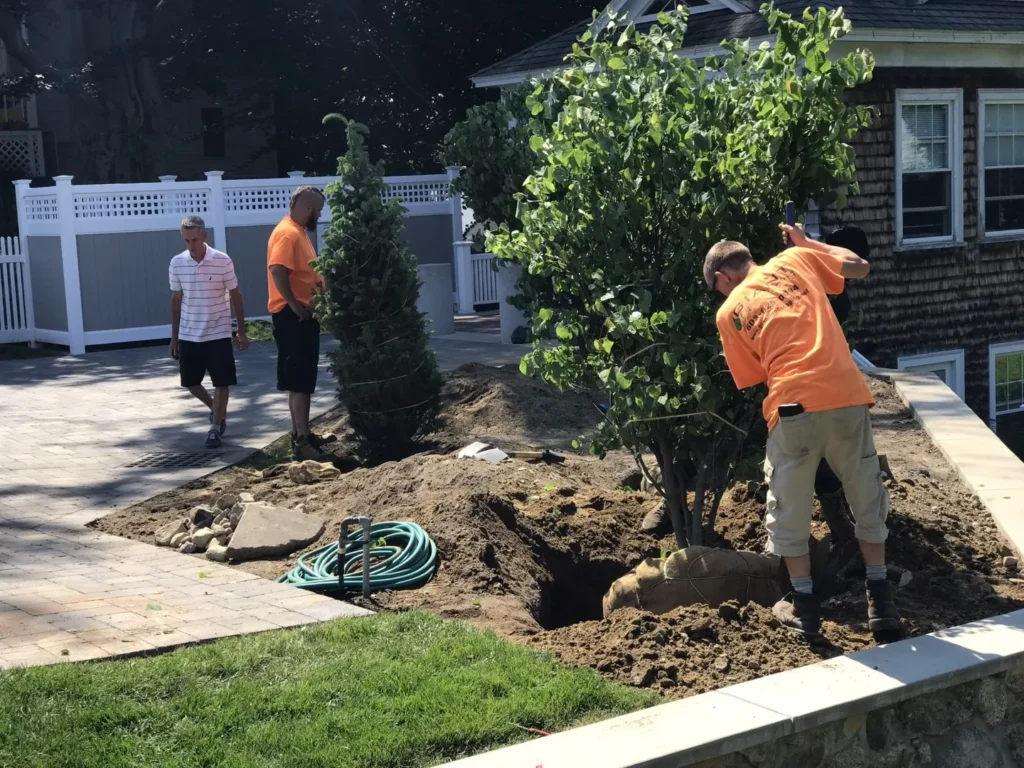
Our Goffstown project is a good example of why that process matters. The goal wasn’t simply to put another tree where the Eastern White Pine once stood. It was to find a tree worthy of the location and capable of becoming part of the property’s next chapter.
For homeowners considering large tree planting in Goffstown, Manchester, Bedford, or elsewhere in Southern New Hampshire, starting with a mature specimen can provide the scale and impact that smaller nursery trees simply can’t offer.
When an ordinary nursery tree isn’t enough, Giant Landscaping can help you find the right tree for the right property.